When Grief Comes With a Decision Attached (145)
Guilt after pregnancy loss often shows up as a loop of “what if” questions. What if I’d done something differently? What if I chose wrong? What if I missed a sign? These questions come from love, not failure. What helps most is coming back to what you already know: this was your baby, and you are their mother.
After I lost my twin daughters at 32 weeks, I believed I was the mother who couldn’t keep her babies alive. I didn’t say that out loud to anyone. But it sat underneath everything. And that belief came with a lot of questions.
Maybe you know those questions too. Maybe they’re the first thing you think about in the morning and the last thing at night.
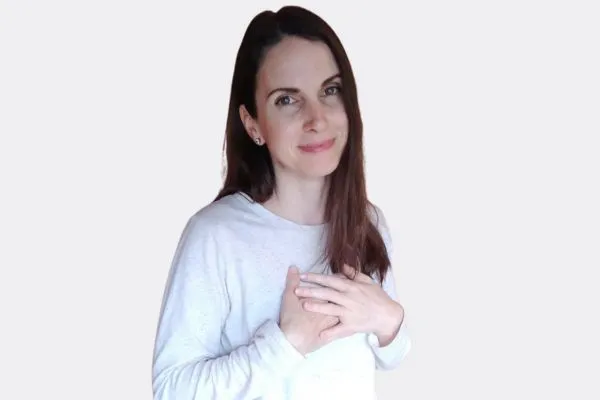
I recently sat down with Sabrina Fletcher, a TFMR bereavement doula, for the podcast. TFMR stands for termination for medical reasons. Her loss looks different from mine, and maybe different from yours. But as she talked, I kept nodding. Because the guilt was the same. The “what ifs” were the same. And the way the world tried to tell her what her loss meant? That was the same too.
Why do I keep asking “what if” after my baby died?
Your mind replays the past because it’s looking for a way you could have kept your baby safe. That search is love with nowhere to go.
Sabrina called them “the questions that haunt us forever.” Hers sounded like: What if the doctor was wrong? What if I’d conceived a month later? What if it was something I did in my twenties?
Mine sounded different. Yours probably do too. Should I have gone in sooner? Should I have noticed the movements slowing down? Did I eat something, lift something, miss something?
Asking these questions doesn’t mean you’re guilty. It means you’re a mother whose whole body was built to protect her baby, and it’s trying to understand how this could happen. The questions are evidence of your love. They are not evidence against you.
You don’t have to answer every one of them to find some peace. Sometimes the kindest thing you can do is notice the question, take a breath, and ask yourself: what do I actually know to be true?
Why do the things people say after a loss hurt so much?
They hurt because other people are making meaning of your loss for you, and their meaning rarely fits your story.
Sabrina described this so clearly. After her loss, people offered explanations that didn’t fit at all. “God needed another angel.” “It was God’s timing.” “Just focus on your kids.” “At least you already have one.”
I heard my own versions. Maybe you’ve heard yours. “Everything happens for a reason.” “You can try again.” “At least you know you can get pregnant.”
Most people mean well. But every one of those sentences takes your story out of your hands and rewrites it in someone else’s words.
And it isn’t only friends and family. Sabrina talked about how, in medical settings, a baby can go from “your baby” to “products of conception” in a single conversation. You lose the words baby, family, mother. Even a doctor saying “you can try again” can land like a door closing on the child you just lost.
You are allowed to say, even just inside your own head: that’s not my story. This was my baby. I am their mother.
What if my loss came with decisions I can’t stop replaying?
Decisions made in crisis, on someone else’s timeline, are not a measure of your love. You did the best you could with what you had in that moment.
So many of us had to make enormous choices in a matter of hours. Sabrina had days to decide on a pregnancy she had planned and wanted with her whole heart. When she asked about cremation, a doctor told her it was “a lot of paperwork” and not to worry about it. In her crisis state, she said, “Oh, okay.”
When I heard that, I thought about every mom I’ve talked to who had to decide about holding her baby, taking pictures, burial or cremation, all while her body was still recovering and her mind was in shock.
Sabrina put it perfectly: there’s so much false urgency around these moments. As if you couldn’t take an hour to go home, get your robe, call your sister. Because yes, it’s a death. But it’s also a birth.
If you’re replaying a decision you made in those hours, I want to offer you this. You were not given the time, the information, or the support you deserved. That’s not a failure on your part. You made the best choice you could in a moment no mother should ever have to face.
Is it normal to feel this broken after a loss?
Yes. You’re grieving, and you’re also postpartum. Both are real, and both deserve care.
This part of our conversation stayed with me for days. Sabrina called postpartum “this between-worlds period,” and it’s the part almost everyone forgets you’re going through.
Postpartum was never meant to be done alone. Someone is supposed to bring you soup. Someone is supposed to say, “Don’t wash the dishes, I’ve got it.” When there’s a baby in your arms, people show up for that.
When there isn’t, they often don’t. But your body still went through a birth. You still need rest, food, water, and someone to look after you. When those basic needs go unmet, Sabrina said, you can start to feel like the crazy one.
You’re not crazy. You’re a mother recovering from a birth with no baby to hold. That deserves care, not a push to get back to work.
Will I forget my baby if I start to feel better?
No. You will not forget your baby. Feeling a little lighter doesn’t erase them. It makes more room to remember them with love instead of only pain.
This is the fear I hear most from the moms I work with. If the pain eases, does that mean I’m leaving my baby behind? If I build a life, does that mean they didn’t matter?
Sabrina said it beautifully: “What you learn years later is that that’s not even a possibility. You never forget them. They’re always there.”
I can tell you the same from more than twenty years of living after my daughters died. They are with me. Not as a wound I manage every day, but as a love that’s part of who I am.
Sabrina shared a dream she had about her daughter in the middle of her decision. In it, her daughter’s message was simple: “I didn’t come to harm you.” She still holds that memory close. When the outside noise gets loud, with all the opinions and details and judgments, that’s where she goes.
How do I come back to what I already know?
Start small. You don’t have to fix the guilt all at once. You just need a few ways to return to the truth when the noise gets loud.
Sabrina said something I think about often. The work isn’t really remembering, she said, because we already know. Her truth through all of it was this: this was my wanted baby. This was a pregnancy loss. I’m her mother, and I always will be.
Here are a few things you might try this week.
Write your baby’s story in your own words. Not the medical version, and not the version other people tell. Yours. Use their name if you have one. If someone else has been telling your story for you, this is a way of taking it back.
Ask your baby a question. Out loud, in a journal, in a quiet moment before sleep. “Do you know I love you?” “Are you okay?” You might be surprised by what comes up when you let yourself listen.
Find people who don’t need it explained. Sabrina asked her community whether they wanted one-on-one support or groups, and the answer was “groups, groups, groups.” There’s something about sitting with other moms who say “me too” and mean it.
And when a “what if” shows up, notice it. Then ask yourself: what’s true? You loved your baby. You did the best you could. You are still their mother.
A Safe Place to Start
If you’re tired of holding this guilt by yourself, I’d love for you to join me for the 3-Day Experience.
It’s three live sessions with me, one each day, plus a workbook for whatever comes up. On Day 1, we name what you’re really feeling, with no fixing and no rushing. On Day 2, we look at the toll the guilt and grief have been taking on your relationships, your work, and your hope for the future. And on Day 3, I’ll teach you the same three-step tool I use myself when the guilt starts to spiral.
You keep all three recordings. And you’ll be in a room with moms who understand, where your loss is honored no matter how early, how late, or how complicated.
Learn more at https://navigatingbabyloss.com/workshop
About the Author
Jennifer Senn is a perinatal grief coach, certified life coach, and NLP practitioner, and the founder of Navigating Baby Loss. She lost her twin daughters to stillbirth at 32 weeks and has spent more than 20 years living after loss. Today, Jennifer walks beside moms after stillbirth and pregnancy loss, helping them quiet the guilt, find themselves again, and build a life their baby is part of. She hosts the Navigating Baby Loss podcast