How to Support a Loss Mom as a Grandparent (Without Saying the Wrong Thing)(134)
When a baby is stillborn, almost all the attention goes to the mom and dad. And it should. But there's someone standing right behind them, watching them hurt, carrying their own version of this loss, and feeling completely invisible. Grandparent grief after stillbirth is real, it's heavy, and almost nobody talks about it.
Whether you're a grandparent trying to figure out how to help your child through the worst thing that's ever happened to them, or you're the loss mom wondering why your parents don't seem to know what to say... this one's for both of you.
And with Mother's Day right around the corner, the timing matters. Because this is one of those seasons where everything about family and loss gets stirred up, and the people who love each other the most can accidentally hurt each other the deepest.
Grandparent Grief Is Real, Even If Nobody Acknowledges It
If you're a grandparent reading this, I want you to hear something that maybe nobody has said to you yet.
Your loss is real.
You lost a grandchild. You lost the dream of holding that baby, of watching your son or daughter become a parent (or become a parent again). Maybe this was your first grandchild, and you were imagining all the firsts. The holidays, the trips, the tiny hands reaching for yours.
All of that was taken in a moment.
You're also grieving the life you pictured for your child. You imagined them growing up, falling in love, building a family. And now you're watching them go through something no parent should have to face. You're mourning what they lost on top of mourning what you lost. That's a double grief, and it's heavy.
Here's what makes it even harder. Nobody's checking in on you. Everyone is focused on the mom and dad, and that's the right thing. But it often means your grief gets completely overlooked. Friends might ask about the parents but forget to ask how you're doing. And that can make you feel like you don't have permission to be sad, because "it wasn't your baby in the same way."
But it was your grandchild. And your grief matters.
Why Grandparents Don't Always Know What to Do
I think back to my own loss often. My husband called my parents from the hospital to tell them what had happened with our twin girls. They weren't far away, so they came right over.
What I didn't fully understand at the time was what that phone call must have been like for them. My own mom had experienced a stillbirth. Her baby died at birth, full term. So when she got that call about my girls, she wasn't just grieving her granddaughters. She was reliving her own loss while watching her daughter go through the same heartbreak she knew so well.
My father-in-law struggled too. He was a twin, and his twin had died at birth. So the loss of our twin girls hit a nerve in him that went all the way back to his own beginning.
They were all with us every step of the way. But honestly? I had so much grief of my own that I didn't have the capacity to fully see theirs. And I think that's true for a lot of loss moms. It's not that we don't care. It's that we're barely surviving, and we can only carry so much at once.
What Grandparents Can Do (And What to Avoid)
If you're a grandparent and you're thinking, "I don't even care about my grief right now, I just want to help my child," I hear you. So let's talk about what actually helps and what doesn't.
What to avoid:
Don't offer advice. Don't say "you can try again." Don't say "at least you have other children." Don't try to find the reason it happened or look for a silver lining. Don't remind them that it happens to a lot of people.
These words can land harder coming from you than from anyone else, because you are one of the most important people in their life. What a loss mom needs most from her parent is to feel seen, not fixed.
What actually helps:
Say, "I'm here. I'm not going anywhere." And mean it.
Be willing to sit in silence. You don't have to fill the space with words. Sometimes the most powerful thing you can do is just be in the room.
Say the baby's name. Acknowledge them as your grandchild. This is one of the most healing things a grandparent can do, and one of the most painful things when it doesn't happen.
Follow their lead. If they want to talk, listen. If they don't, just be present. If they want to cry, let them cry without trying to stop it or fix it.
Ask, "What do you need from me right now?" And be okay if the answer is "nothing" or "I don't know."
And if they pull away? Please don't take it personally. Grief makes people retreat. Sometimes being around a safe person makes the pain feel bigger, not smaller. It's not rejection. It's survival. Stay close enough that they know you're there, but don't force your way in.
A Note for In-Laws
If the loss mom is your daughter-in-law, it might feel even more delicate. You might not be sure how much space to take up or how close to get. But the same things apply. Say less. Show up. Say the baby's name. Follow her lead.
Your willingness to acknowledge that baby as your grandchild means more than you'll ever know.
Mother's Day and Why It Matters So Much Right Now
Mother's Day is one of the hardest days of the year for a mom who lost her baby. She might not know if she's "allowed" to call herself a mother. She might be dreading the day entirely. And the people around her might not know whether to acknowledge it or avoid it.
If you're the grandparent, consider how you recognize her this Mother's Day. She is a mother, even without a baby in her arms. And hearing that from you, of all people, can be the thing that holds the relationship together.
A card that mentions the baby by name. A small piece of jewelry with their birthstone. Even just the words: "You are a mother. Your baby is my grandchild. I will never forget them."
That kind of acknowledgment can be everything.
And the absence of it? That can be the thing that creates a fracture that takes years to repair.
For the Loss Mom Reading This
If your parents or in-laws haven't acknowledged your baby the way you need them to, it might not be because they don't care. It might be because they're terrified of making it worse. They might think that not bringing it up is somehow protecting you.
If you have the energy, consider telling them what you need. Something like, "I need you to say their name. I need you to remember them on Mother's Day. I need you to treat me like a mother, because I am one."
And if you don't have the energy for that conversation right now? That's okay too. You don't owe anyone an education in your grief.
But if this post says the thing you haven't been able to say yourself, share it. Sometimes all it takes is opening that door.
The Silence That Hurts the Most
The thing that damages family relationships most after a loss is when the baby becomes the thing nobody talks about. Everyone talks about everything except the baby who isn't there. That kind of silence causes deep, lasting hurt, and it can create a distance between loss moms and their parents that's incredibly hard to come back from.
It doesn't have to be that way. A few honest words, a willingness to sit in the discomfort, and the courage to say the baby's name - that can be the bridge.
You Don't Have to Carry This Alone
Whether you're the grandparent trying to figure out how to help, or the loss mom carrying grief that feels like nobody really gets it, you don't have to figure this out by yourself.
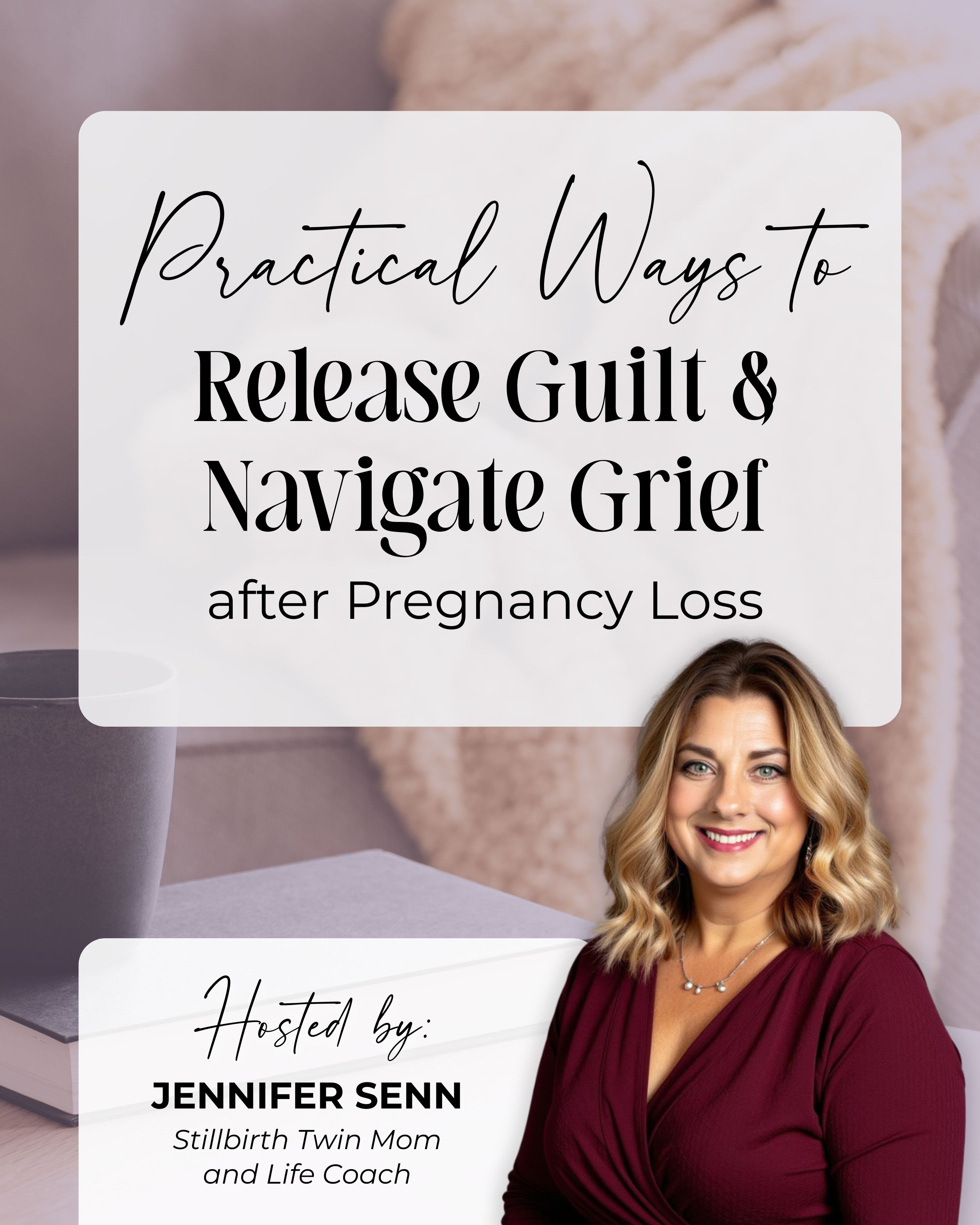
If you're a mom who's been holding all of this - the grief, the guilt, the feeling that nobody truly understands - I have a free workshop called Practical Ways to Release Guilt and Navigate Grief After Baby Loss. It goes deeper into the things we talked about here, and it's a really gentle place to start. You can sign up at navigatingbabyloss.com/workshop. No pressure. It's just there if you're ready.
And if you know a grandparent, a mother-in-law, a parent, or anyone who needs to hear this, share this with them. It might open a conversation that changes everything.
Sending you so much love.